See what ClearTitle AI™ delivers — before you pilot
Open the Report Preview Center for a guided, screenshot-backed walkthrough of the current residential report structure.
Or open full sample reports in a new tab for a true examiner-grade read.
This brochure now mirrors the current residential report sequence, so prospects see the same narrative flow they will encounter in the live deliverable.
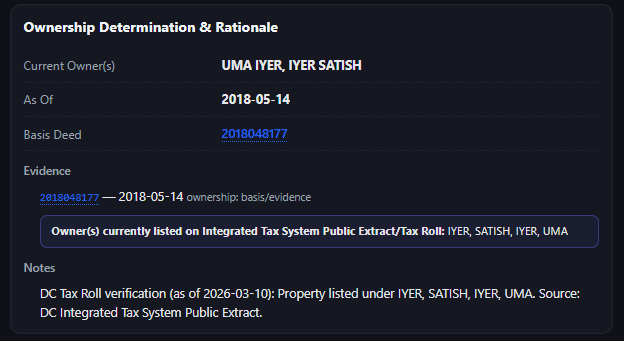
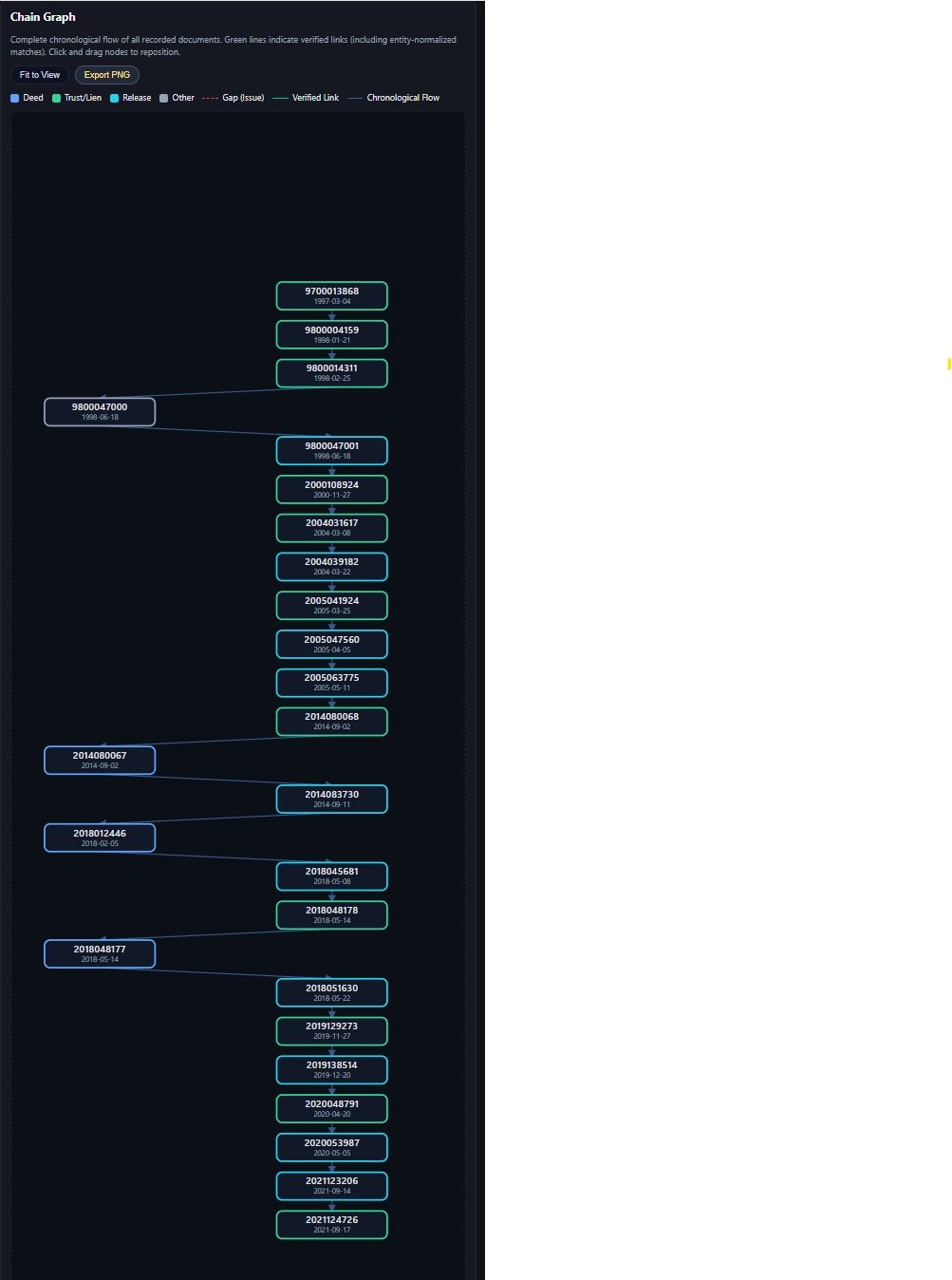
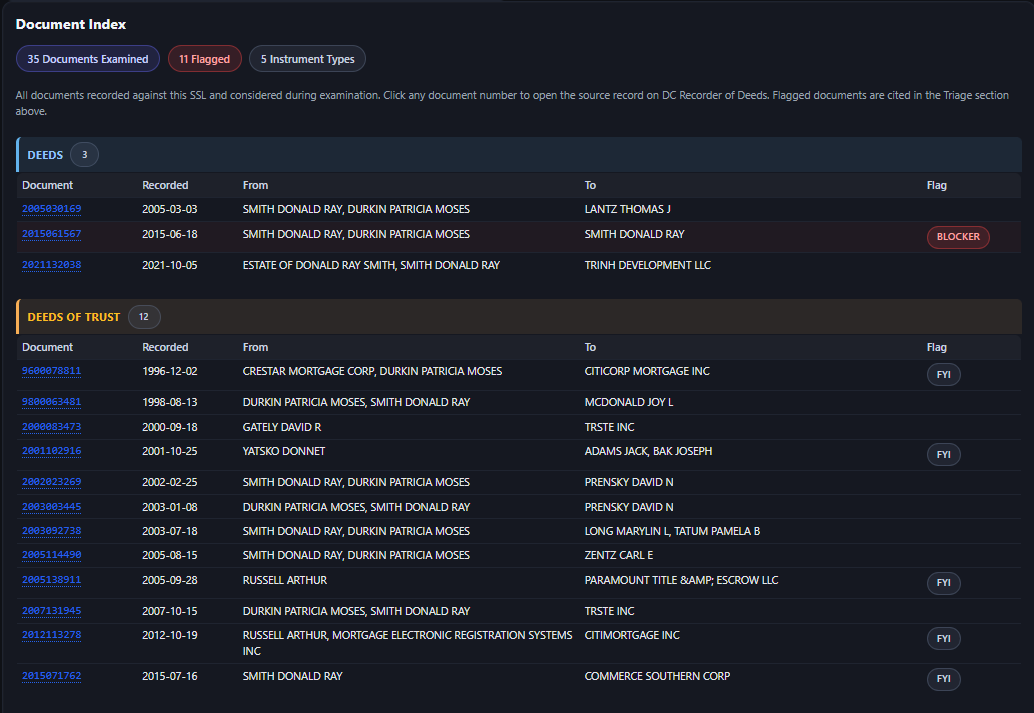
The strongest workflow story is now front-loaded: dashboard → summary → triage → deeper chain, ownership, risk, and cure analysis.
New screenshots should emphasize actionability, evidence traceability, and examiner usability rather than generic marketing visuals.
Use full samples for depth; use this preview modal for a fast guided tour during outreach, demos, and pilot conversations.
Reports remain informational software output and should be independently verified before closing, underwriting, or third-party reliance.
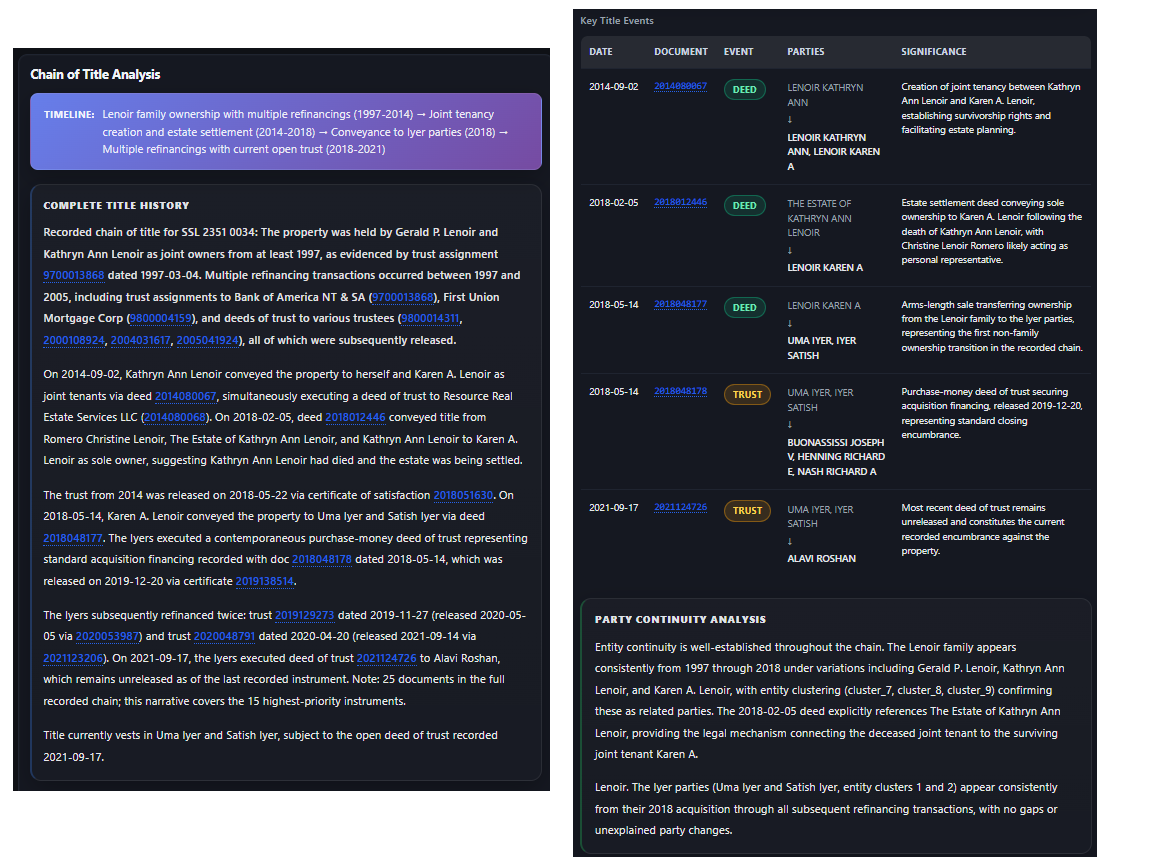
1
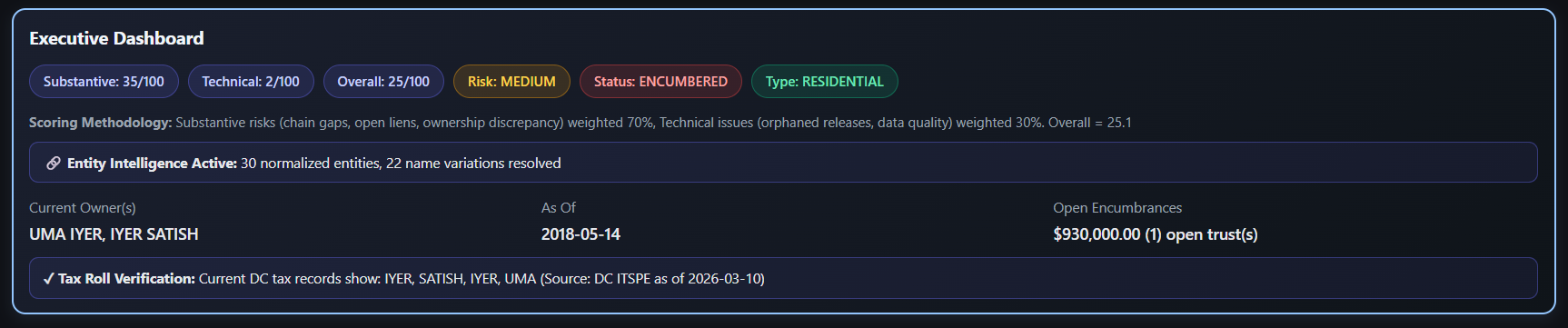
Executive Dashboard
Instant posture in seconds: overall status, title score, encumbrance rollup, and entity intelligence signals.
Fast triage: surfaces overall title posture before the reviewer starts reading the full report.
High-signal KPIs: title score, trust counts, and severity posture reduce manual scanning.
Entity intelligence: highlights normalization progress when party-name variants exist.
Risk postureEncumbrance rollupEntity intelligence
Click to zoom • Screenshot: Executive Dashboard
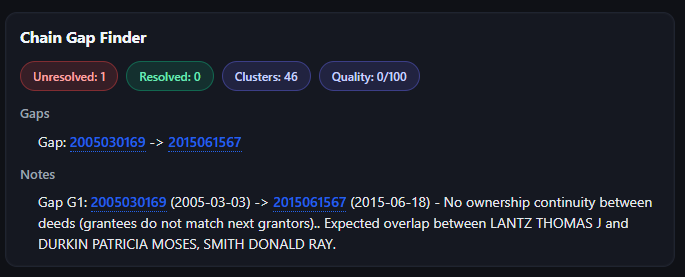
2
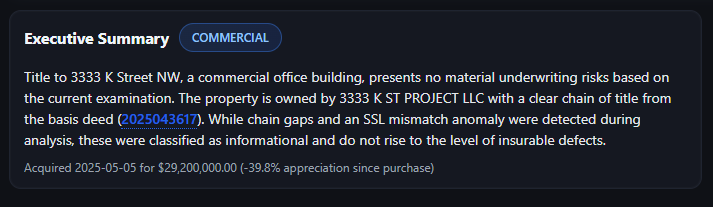
Executive Summary
A concise plain-English explanation of the property’s title posture, key issues, and examiner takeaway.
Readable first pass: lets a reviewer understand the story before drilling into underlying sections.
Decision-oriented: clarifies whether the file appears clean, encumbered, or blocked by a small number of critical issues.
Client-friendly: useful for explaining findings internally without forcing stakeholders to read the whole report first.
Plain EnglishDecision-readyHigh-level takeaway
Click to zoom • Screenshot: Executive Summary
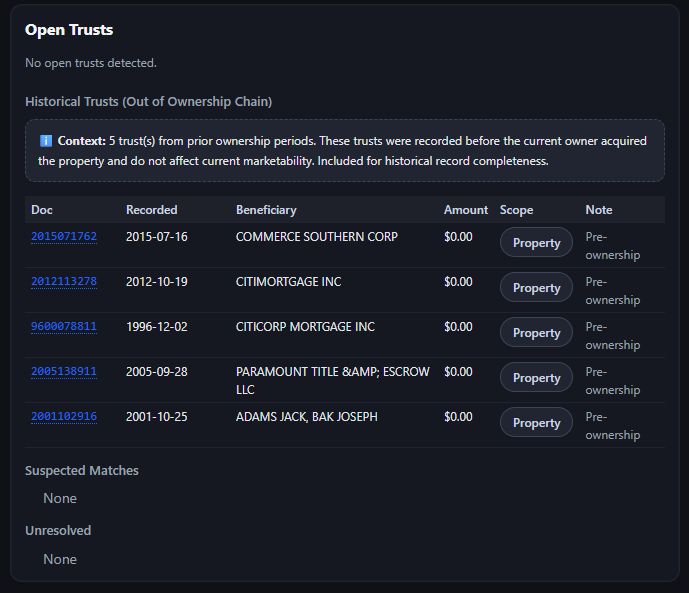
3
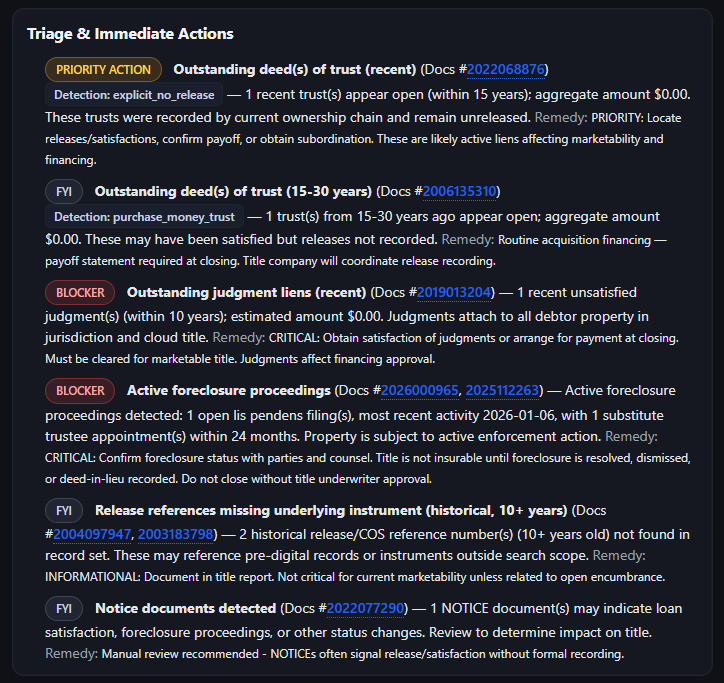
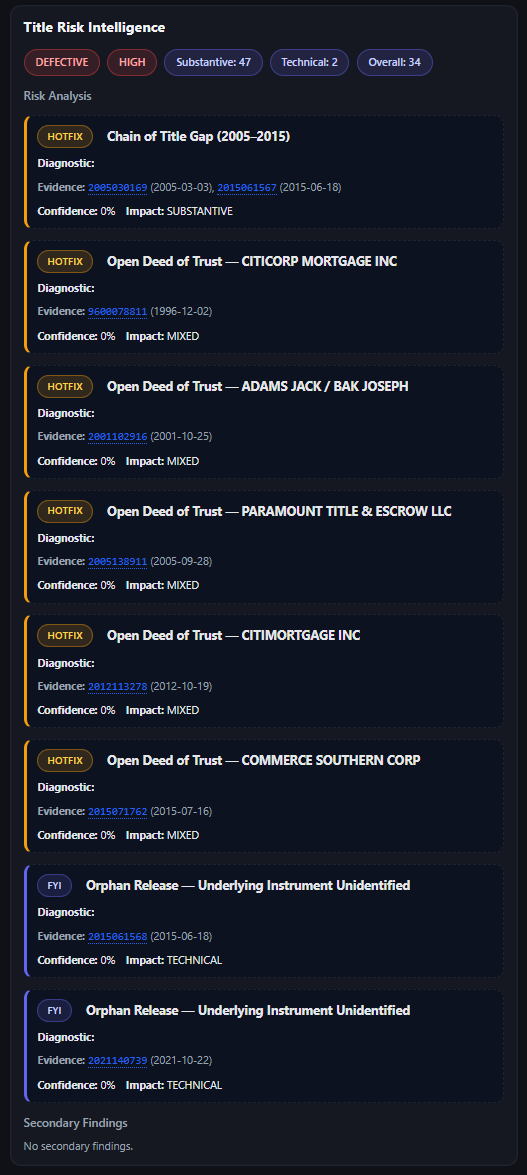
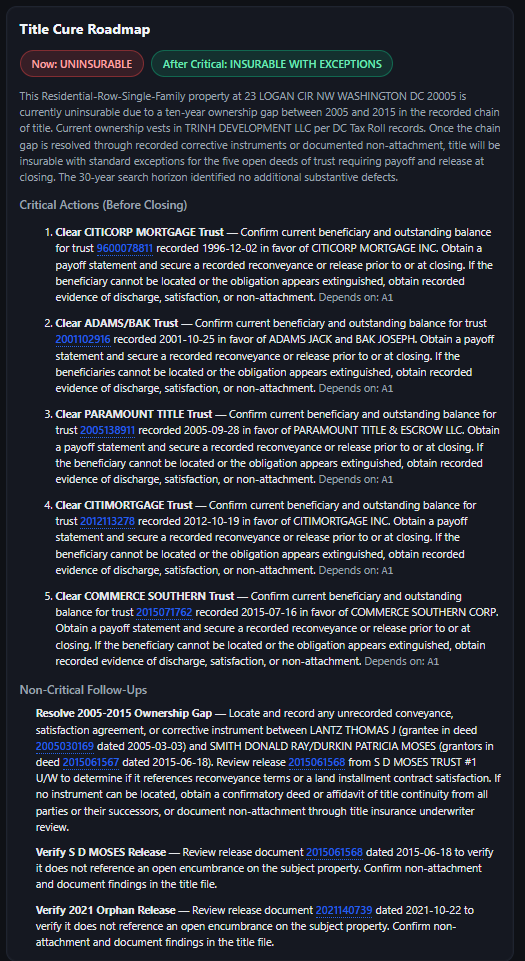
Triage & Immediate Actions
The report surfaces blocking items early so an examiner can focus immediately on what matters most.
Critical-first layout: highlights issues that could affect closeability or insurability.
Workflow acceleration: helps teams decide where to spend examiner time before reading every section.
Operational clarity: creates a natural handoff from summary into ownership, risk, and cure work.